


In his address, Trump positioned himself as a defender of traditional values, framing his message in a manner that resonated with a segment of the audience concerned about globalization and cultural change. He emphasized the need to restore what he described as American greatness, tapping into sentiments that have been prevalent among his supporters since his initial campaign in 2016. For a deeper understanding of these sentiments, you can read about how Stellan Skarsgård criticises Trump’s actions in Denmark.
The speech included references to economic policies that Trump claims will benefit American workers, while also addressing issues of immigration and race. Critics have pointed out that his rhetoric could deepen existing societal divides and perpetuate stereotypes, raising concerns about the implications of such a message on a global stage.
As the political landscape in the United States continues to evolve, Trump’s remarks at Davos are seen as a strategic move to galvanize his base and attract undecided voters. The timing of the speech, ahead of the upcoming election cycle, underscores the significance of his narrative in shaping public discourse around race and identity.
Understanding the backdrop of the Davos summit
The annual World Economic Forum in Davos, Switzerland, serves as a platform for global leaders to discuss pressing economic and social issues. Historically, this summit has attracted influential figures from politics, business, and civil society, making it a focal point for addressing global challenges. In recent years, however, the discourse has been increasingly polarized, reflecting broader societal divisions, particularly around issues of race and identity.
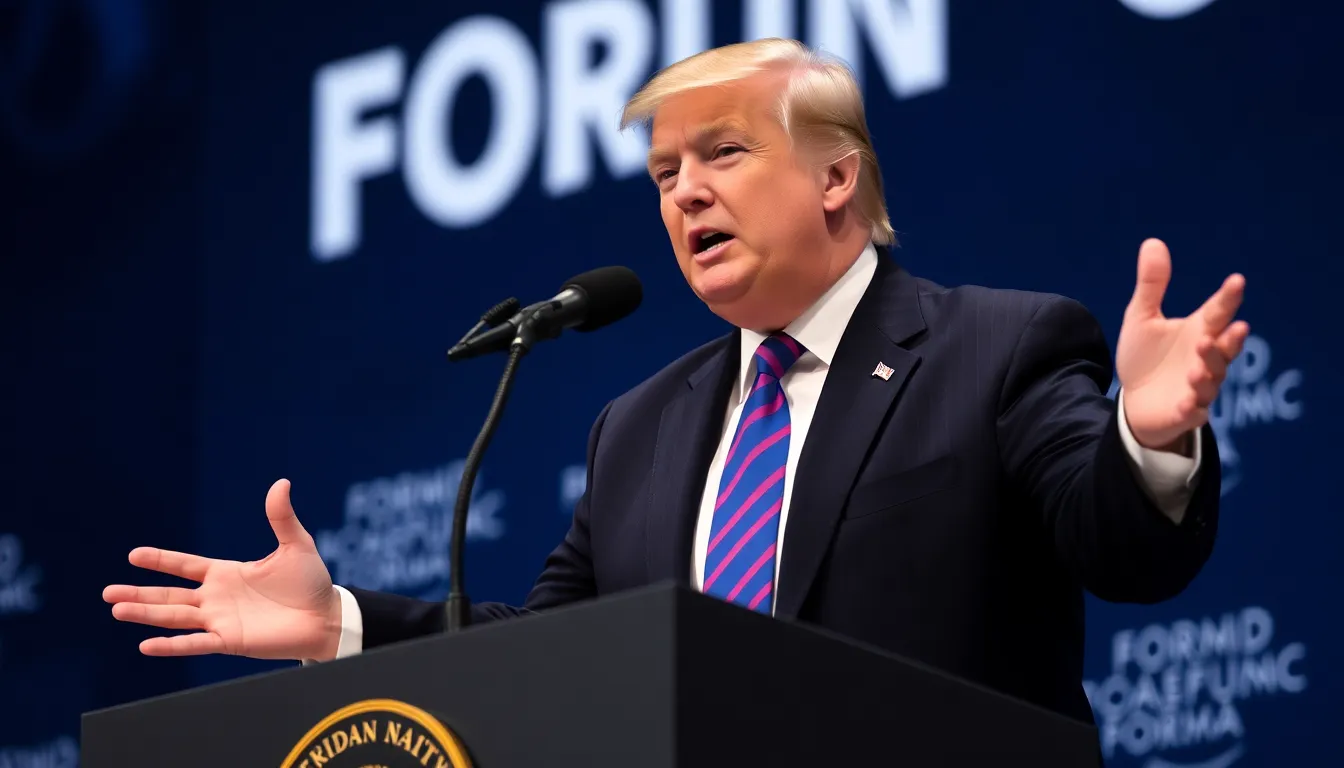
Donald Trump’s speech at Davos, where he positioned himself as a “great white hope,” taps into a long-standing narrative in American politics that intertwines race with economic policy. This rhetoric can be traced back to the post-Civil War era, where figures like former President Andrew Johnson sought to restore white supremacy in the South. You can explore similar historical themes in the context of modern governance in the article about a dissenting film-maker predicting loss of control for the Khamenei regime in Iran.
The Economic Context
The backdrop of economic disparity plays a crucial role in shaping the narratives presented at Davos. The rise of populism in many Western nations, including the United States, has been fueled by a growing divide between the wealthy elite and the working class. Trump’s positioning of himself as a champion for the “forgotten” white working class echoes sentiments from the 1930s, when economic hardship led to the rise of nationalist movements that often scapegoated minorities.
Furthermore, the global economic landscape has shifted dramatically in recent decades, with increasing automation and globalization contributing to job losses in traditional industries. This has led to a resurgence of identity politics, where racial and ethnic identities become focal points for political mobilization, as seen in Trump’s rhetoric. His speech at Davos is not just a reflection of his personal beliefs but also a strategic move to resonate with a base that feels marginalized in the current economic climate.
As discussions around equity and inclusion gain momentum on global platforms, Trump’s speech represents a counter-narrative that seeks to reclaim a sense of dominance for certain demographics. This dynamic illustrates the ongoing struggle between progressive values and reactionary politics, highlighting the complexities of race, power, and economics in today’s society.
Key issues and stakeholders in the Davos discourse
The recent speech by Donald Trump at the World Economic Forum in Davos has reignited discussions around race, nationalism, and global economic policies. As a prominent figure, Trump positions himself as a champion for those who feel marginalized in the current socio-political climate. His rhetoric appeals to a segment of the population that perceives threats from globalization and demographic changes.
Key stakeholders in this discourse include:
- Donald Trump: As a former President and a leading voice for right-wing populism, he aims to consolidate support among his base by framing himself as a defender against perceived injustices.
- World Economic Forum (WEF): This organization serves as a platform for dialogue among global leaders, and it must navigate the complexities of Trump’s polarizing views while maintaining its reputation for fostering constructive discussions.
- International Business Leaders: Many corporate leaders attending Davos are focused on global cooperation and economic stability, which may conflict with Trump’s nationalist approach.
- Activist Groups: Various organizations advocating for racial equality and social justice are likely to respond critically to Trump’s narrative, arguing that it undermines progress made in addressing systemic racism.
- Global Governments: Leaders from different nations attending Davos will weigh their responses to Trump’s speech, balancing their own domestic agendas with international diplomatic relations.
Conflicts arise as Trump’s portrayal of himself as a “great white hope” can alienate minority groups and exacerbate racial tensions. His speech reflects a broader trend of populist leaders leveraging racial identity to galvanize support, which poses challenges for nations striving for inclusivity and diversity. For further insights on the societal impacts of public figures, consider reading about the incident where actor Peter Mullan was attacked while intervening in an assault.
Moreover, the economic implications of Trump’s rhetoric cannot be overlooked. His emphasis on nationalism may lead to trade tensions and disrupt established economic partnerships. This presents a trade-off for global leaders who must consider the potential backlash against protectionist policies while addressing their constituents’ concerns about globalization.
In summary, the discourse at Davos surrounding Trump’s speech encapsulates a myriad of stakeholders with conflicting interests, highlighting the delicate balance between national identity and global cooperation. The legal and economic ramifications of these discussions will likely shape the international landscape in the coming years.
The implications of Trump’s speech on global perceptions
Trump’s recent speech at Davos has reverberated through various sectors, affecting not only political discourse but also economic landscapes. The rhetoric, steeped in racial undertones, may alienate diverse communities and international allies, leading to heightened tensions in diplomatic relations. Groups such as minority communities, civil rights organizations, and global political leaders are particularly impacted by the implications of his message.
In the short term, businesses that rely on international partnerships may face backlash or boycotts from consumers who oppose Trump’s views. Industries such as tourism, hospitality, and global trade might experience fluctuations as public sentiment shifts. Additionally, companies with a commitment to diversity and inclusion may find themselves in a precarious position, needing to reassess their branding and outreach strategies.
Mid-term effects could manifest in policy changes, as lawmakers respond to the heightened racial discourse. Local and national governments may introduce legislation aimed at countering the divisive rhetoric, potentially leading to stricter regulations on hate speech and discrimination. Conversely, there is a risk that some regions may adopt more exclusionary policies, further entrenching societal divides.
- Economic Impact: Potential boycotts affecting businesses and tourism.
- Social Consequences: Increased polarization within communities.
- Policy Shifts: Possible introduction of new legislation addressing hate speech.
- Opportunities for Advocacy: Civil rights organizations may gain traction and support.
While the immediate fallout from Trump’s speech may seem detrimental, there are potential opportunities for advocacy groups to mobilize and raise awareness about racism and inclusivity. This could lead to a stronger coalition of voices advocating for social justice and equality, ultimately reshaping the narrative around race and identity in the global arena.
A: Trump’s speech focused on portraying himself as a leader against racism, claiming to be a hope for those feeling marginalized. He emphasized themes of nationalism and economic opportunity. A: The audience had mixed reactions, with some applauding his message while others criticized it as divisive and out of touch with global issues. A: Trump’s statements may influence international relations and perceptions of the U.S., particularly regarding race and equality issues, potentially polarizing opinions further. A: Unlike previous addresses that focused on global cooperation, Trump’s speech leaned heavily into nationalism and individualism, marking a stark departure from the summit’s typical themes. A: Political leaders have expressed concern over Trump’s rhetoric, with some calling it a step backward in the fight against racism and inequality.
Frequently asked questions about Trump’s Davos speech
Key takeaways and future outlook from the Davos speech
Trump’s recent speech at Davos has reignited discussions around race, identity, and leadership on a global scale. By positioning himself as a “great white hope,” he not only appeals to a specific voter base but also raises significant questions about the implications of such rhetoric in an increasingly diverse world. Observers will need to consider how this narrative influences both domestic and international political landscapes.
As the political climate continues to evolve, the reactions to Trump’s statements will likely shape future dialogues around race and governance. Stakeholders in various sectors, from business to politics, should monitor these developments closely, as they may signal shifts in public sentiment and policy directions.
- The potential for increased polarization in political discourse as Trump’s rhetoric gains traction.
- Impacts on international relations, particularly with countries prioritizing diversity and inclusion.
- Responses from other political figures and parties, which could redefine their strategies and messaging.
- The role of media in framing and interpreting Trump’s narrative and its effects on public perception.
- Long-term implications for voter demographics and electoral outcomes in upcoming elections.