


The MiniBooNE experiment, which began in 2002, aimed to detect these elusive particles but reported an anomaly that some scientists interpreted as evidence for sterile neutrinos. However, the latest data from MicroBooNE, which has been operational since 2018, suggests that the anomalies observed may be attributed to other, more conventional processes rather than the presence of sterile neutrinos, as discussed in a new study.
This development is significant because sterile neutrinos were thought to be a potential solution to several unresolved issues in particle physics, including the nature of dark matter and the imbalance between matter and antimatter in the universe. The conflicting results from these experiments highlight the complexity of neutrino physics and the challenges scientists face in understanding these fundamental particles.
The implications of these findings extend beyond theoretical physics, as they may influence future research directions and funding priorities in the field. As scientists continue to analyze the data and refine their models, the debate over the existence of sterile neutrinos remains a critical topic within the scientific community.
Understanding the significance of sterile neutrinos in physics
Sterile neutrinos are a theoretical type of neutrino that do not interact through the standard weak interactions that govern the behavior of known neutrinos. Their existence is proposed to help explain various phenomena in particle physics, including the observed mass differences between neutrinos and the mystery of dark matter. The study of sterile neutrinos has gained attention since the late 1990s, particularly after experiments hinted at anomalies that could not be easily reconciled with the Standard Model of particle physics, similar to findings in recent controversies.

The idea of sterile neutrinos emerged from the need to account for discrepancies observed in neutrino oscillation experiments, such as the Solar Neutrino Problem and the LSND (Liquid Scintillator Neutrino Detector) anomaly. These experiments suggested that there might be additional, heavier neutrinos beyond the three known types (electron, muon, and tau neutrinos). As a result, researchers began to explore the possibility of sterile neutrinos as a means to resolve these inconsistencies.
Over the years, various experiments have been conducted to detect sterile neutrinos, with mixed results. While some experiments reported signals that could be interpreted as evidence of their existence, others have failed to replicate these findings, leading to a growing debate within the scientific community. This uncertainty has significant implications for our understanding of fundamental physics, as the confirmation of sterile neutrinos could lead to new physics beyond the Standard Model.
Key experiments and milestones
Several key experiments have marked the timeline of sterile neutrino research. The MiniBooNE experiment, for instance, was designed to investigate the LSND anomaly and has produced results that have been both supportive and contradictory of sterile neutrino hypotheses. Similarly, the recent results from the NOvA and T2K experiments have added further complexity to the landscape, suggesting that the existence of sterile neutrinos may not align with previous predictions. These ongoing investigations highlight the challenges faced by physicists in reaching a consensus on the matter.
Key stakeholders and the implications of the findings
The ongoing research into sterile neutrinos has attracted the attention of various stakeholders, including physicists, research institutions, government agencies, and funding bodies. Each of these groups has distinct interests that shape their involvement in the discourse surrounding the latest experimental findings.
Physicists, particularly those specializing in particle physics and cosmology, are at the forefront of this research. Their primary interest lies in understanding the fundamental nature of neutrinos and their role in the universe. The recent experiments that challenge the predictions about sterile neutrinos have sparked debates within the scientific community, leading to a reassessment of theoretical models and experimental methodologies.

Research institutions, such as CERN and Fermilab, are also key players in this landscape. These organizations not only conduct experiments but also influence the direction of research funding and collaboration. The implications of the sterile neutrino findings could impact future projects and the allocation of resources, creating potential conflicts over priorities and funding distribution.
- Conflicts of interest: Discrepancies between theoretical predictions and experimental results may lead to tensions among researchers advocating for different interpretations.
- Economic considerations: Funding for particle physics research is often limited, and significant shifts in focus may affect the financial viability of ongoing and future projects.
- Legal implications: As research progresses, there may be intellectual property concerns regarding new technologies or methodologies developed in the pursuit of sterile neutrino studies.
Government agencies, particularly those involved in scientific funding and policy-making, also play a crucial role. They are tasked with evaluating the societal benefits of scientific research, which can influence the level of investment in particle physics. The findings regarding sterile neutrinos could have broader implications for energy research and national security, as understanding fundamental particles may lead to advancements in technology.
Potential effects on the field of particle physics and beyond
The latest experiments surrounding sterile neutrinos have stirred significant interest and confusion within the scientific community. Researchers, particularly those in particle physics, cosmology, and related fields, are directly affected as they reassess their theories and models in light of new data. Universities and research institutions focused on fundamental physics may experience shifts in funding and research priorities as a result of these developments.
In the short term, scientists may face challenges in securing grants and support for projects that rely on the previous understanding of neutrinos. This uncertainty could lead to a slowdown in research progress as teams scramble to validate or refute the new findings. However, it also presents an opportunity for innovative research approaches and collaboration across disciplines, potentially leading to breakthroughs in understanding the universe.
Industries that rely on advancements in particle physics, such as technology sectors focused on medical imaging and radiation therapy, may experience fluctuations in product development timelines. The ambiguity surrounding sterile neutrinos could delay the implementation of new technologies that depend on a stable understanding of neutrino behavior. Conversely, if new theories emerge, they could pave the way for novel applications in various fields.
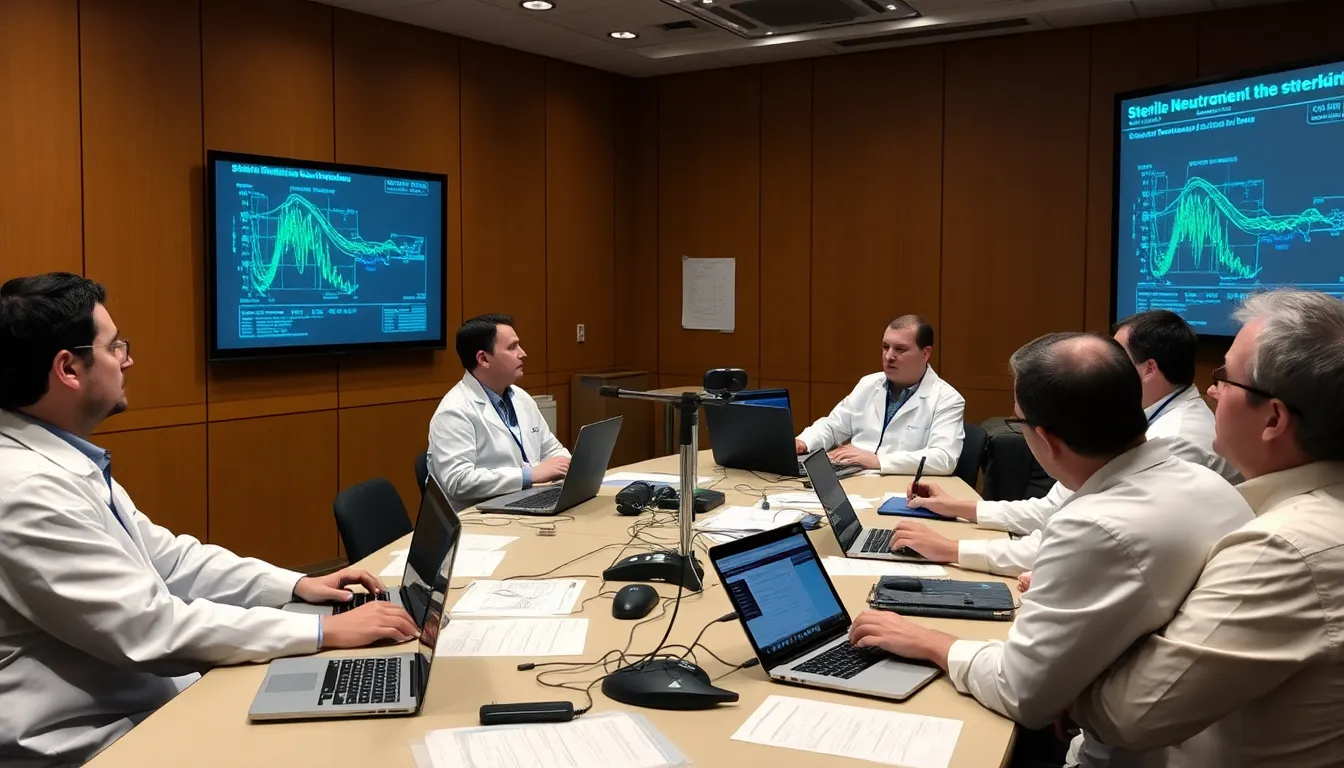
- Risks: Potential delays in research and funding, uncertainty in technology development.
- Opportunities: New collaborative projects, innovative research pathways, potential breakthroughs in understanding fundamental physics.
Regions with strong scientific communities, such as those near major research facilities, may see a shift in focus as local economies adapt to the changing landscape of scientific inquiry. As researchers seek to explore the implications of sterile neutrinos, there could be an influx of talent and investment in these areas, fostering growth in related sectors.
A: Sterile neutrinos are a proposed type of neutrino that do not interact through the standard weak interactions, making them difficult to detect. They are theorized to play a role in explaining dark matter. A: Recent experiments have produced results that contradict earlier predictions about sterile neutrinos, leading to confusion and debate among physicists. This could impact our understanding of fundamental particles. A: The findings challenge established theories in particle physics, potentially requiring a reevaluation of models that include sterile neutrinos. This could lead to new research directions. A: Researchers will likely conduct further experiments to clarify the role of sterile neutrinos and address the discrepancies in findings. Collaboration among institutions will be crucial. A: While sterile neutrinos are primarily a theoretical concept, understanding them could have implications for technologies related to energy and particle detection.
Frequently asked questions about sterile neutrinos
Looking ahead: what this means for future research
The recent experimental results surrounding sterile neutrinos have added layers of complexity to our understanding of these elusive particles. As researchers grapple with conflicting data, the implications for both theoretical models and experimental approaches are significant. The path forward will require a careful reevaluation of existing frameworks and methodologies to reconcile the discrepancies observed in the latest studies.
Future investigations will likely focus on refining detection techniques and enhancing the precision of measurements. This may lead to new insights not only about sterile neutrinos but also about the fundamental properties of neutrinos as a whole. Collaborative efforts across laboratories and disciplines will be essential to navigate this intricate landscape.
- Increased collaboration among research institutions may lead to innovative experimental designs that can address current ambiguities.
- Advancements in detector technology could improve the sensitivity and accuracy of sterile neutrino searches.
- Theoretical models will need to adapt to incorporate new findings, potentially reshaping our understanding of neutrino physics.
- Continued exploration of the implications of sterile neutrinos could have far-reaching effects on cosmology and particle physics.
- Monitoring ongoing experiments will be crucial as they may yield results that challenge or confirm existing theories.