


In addition to NASA, other countries are making significant strides in lunar exploration. The Indian Space Research Organisation (ISRO) successfully landed its Chandrayaan-3 mission on the Moon in August 2023, demonstrating India’s growing capabilities in space technology. This mission included a rover that is conducting surface analysis, contributing valuable data to the global scientific community. You can learn more about this in our article on Exploring the Moon and Mars and the Importance of NASA’s Mission.
Private companies are also entering the lunar landscape, with SpaceX and Blue Origin leading the charge. SpaceX’s Starship is being developed for lunar landings as part of NASA’s Artemis program, while Blue Origin’s National Team is working on its own lunar lander. These developments highlight the increasing role of commercial entities in space exploration and the potential impact on resource utilization on the Moon.
The exploration of the Moon is not merely a scientific endeavor; it has significant geopolitical implications. Countries are vying for leadership in space, and the Moon is viewed as a potential resource hub for future missions to Mars and beyond. As nations invest in lunar missions, the global landscape of space exploration is rapidly evolving.
Understanding the significance of the moon’s far side
The far side of the moon, often referred to as the “dark side,” has captivated humanity’s imagination for centuries. Historically, this side remained unseen by the naked eye from Earth until the advent of space exploration. The first images of the far side were captured by the Soviet spacecraft Luna 3 in 1959, marking a significant milestone in our understanding of lunar geography and geology. This event not only expanded our knowledge of the moon but also symbolized the fierce competition of the Space Race during the Cold War era, which is further explored in our discussions on Ben Jennings comments on Donald Trump and the moon mission in cartoon.

Politically, the exploration of the moon’s far side has implications that extend beyond scientific curiosity. As nations invest in space exploration, the far side becomes a focal point for geopolitical interests, particularly in the context of resource utilization and territorial claims. The potential for discovering valuable minerals or establishing bases on the moon raises questions about space governance and international cooperation, echoing the debates surrounding the Outer Space Treaty of 1967, which aims to prevent the militarization of space.
Economically, the interest in the moon’s far side is driven by the potential for future lunar missions and the establishment of a sustainable presence beyond Earth. Private companies and national space agencies are increasingly looking to the moon as a launching pad for deeper space exploration, including missions to Mars. The Artemis program, led by NASA, aims to return humans to the moon and explore its far side, fostering partnerships with international space agencies and commercial entities, thereby stimulating economic growth in the aerospace sector.
Social implications of lunar exploration
The exploration of the moon’s far side also has profound social implications. As advancements in technology make lunar missions more feasible, public interest in space exploration surges. This fascination can inspire future generations to pursue careers in science, technology, engineering, and mathematics (STEM). Furthermore, the idea of exploring the unknown fosters a sense of unity among people worldwide, transcending national borders and emphasizing our shared human experience in the cosmos.
Key stakeholders and issues surrounding lunar missions
The exploration of the far side of the moon has garnered significant interest from various stakeholders, including national space agencies, private aerospace companies, and international organizations. Each of these actors has distinct motivations that shape their involvement in lunar missions. For instance, government agencies like NASA and the European Space Agency (ESA) are primarily focused on scientific discovery and technological advancement, while private companies such as SpaceX and Blue Origin are driven by commercial opportunities and the potential for profit in space tourism and resource extraction.
Conflicts often arise between these stakeholders, particularly concerning the allocation of resources and the sharing of scientific data. As countries and companies race to establish a foothold on the moon, issues of sovereignty and territorial rights come into play. The Outer Space Treaty of 1967, which prohibits any nation from claiming sovereignty over celestial bodies, complicates these dynamics, leading to legal ambiguities around lunar exploration and exploitation.
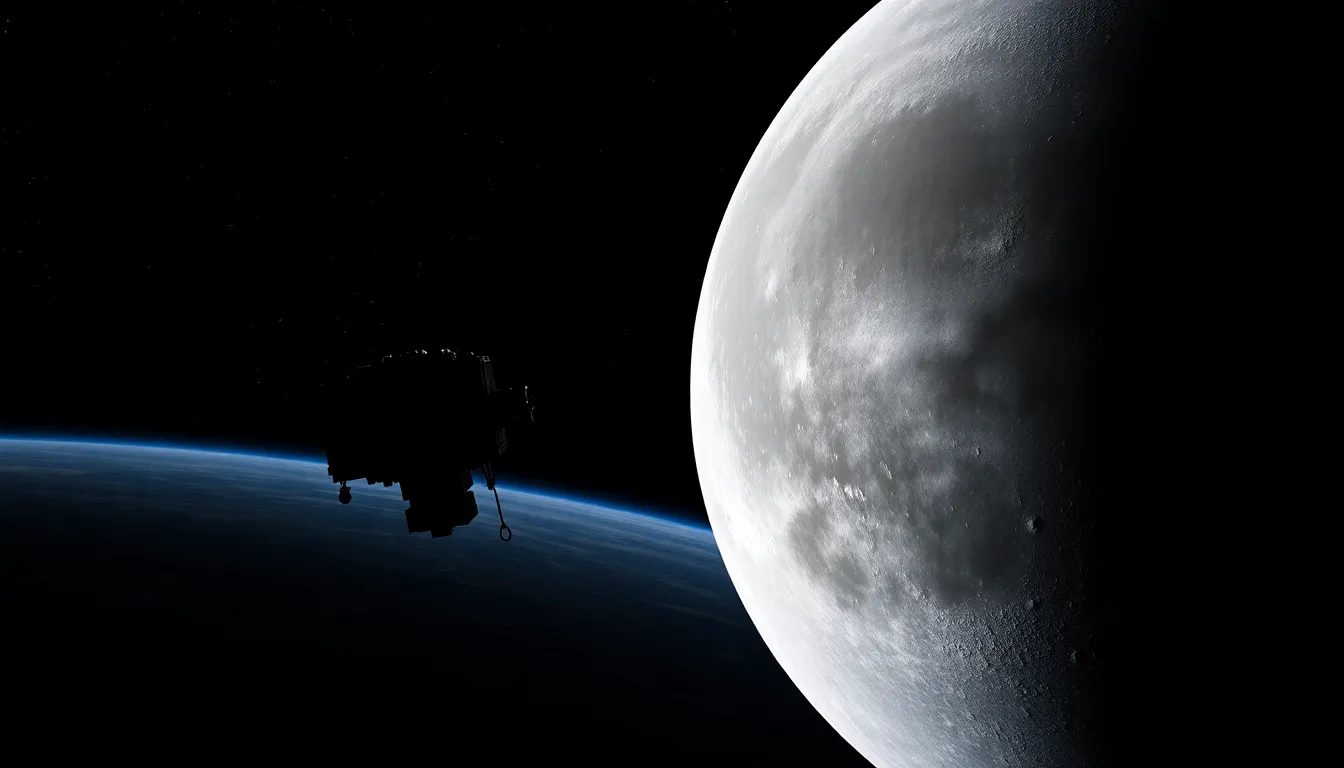
Moreover, the economic implications of lunar missions are substantial. Investment in space exploration can yield technological innovations that benefit various industries on Earth. However, the high costs associated with these missions can lead to trade-offs, where funding for lunar exploration may divert resources from pressing terrestrial issues such as climate change and social inequality. This raises ethical questions about prioritization in public spending and the long-term benefits of space exploration.
- Scientific Interests: Understanding lunar geology and potential for future human habitation.
- Commercial Interests: Mining lunar resources and developing space tourism.
- International Collaboration: Opportunities for joint missions versus competition for dominance.
- Legal Framework: Navigating the complexities of international space law.
- Societal Impact: Balancing investment in space exploration with addressing global challenges.
Who will be affected by lunar exploration initiatives
The exploration of the far side of the moon is set to influence a variety of groups, industries, and regions. Space agencies, private aerospace companies, scientists, and researchers are at the forefront of this initiative. Additionally, communities involved in technology development, education, and environmental sustainability will also feel the impact. The global nature of space exploration means that countries with robust space programs, such as the United States, China, and members of the European Union, will experience significant effects.
In the short term, industries related to aerospace and technology will see increased investment and job creation as governments and private entities ramp up their lunar missions. This surge in funding can lead to advancements in materials science, robotics, and telecommunications. Educational institutions may also benefit as interest in STEM fields rises, encouraging more students to pursue careers in science and engineering.
Mid-term impacts could include shifts in policy as governments reassess their space exploration strategies and international collaborations. The potential for resource extraction from the moon, such as helium-3 for energy, could ignite discussions on space mining regulations and environmental considerations. Furthermore, advancements in lunar exploration technology may lead to innovations in other sectors, such as transportation and renewable energy.

- Risks: Increased competition among nations could lead to geopolitical tensions, while the environmental impact of lunar missions may spark public outcry.
- Opportunities: New markets may emerge in space tourism and lunar infrastructure development, potentially leading to economic growth.
Ultimately, the ripple effects of lunar exploration initiatives will extend beyond the scientific community, influencing everyday life, business practices, and global policies in unforeseen ways.
A: The far side of the moon refers to the hemisphere that is always facing away from Earth. It is less explored than the near side, making it a subject of interest for scientific research. A: Exploring the far side can provide insights into the moon’s geology and history, and it may also help in understanding the early solar system. A: Several space agencies, including NASA and CNSA, have proposed missions to explore the far side, focusing on potential landings and scientific research. A: Lunar exploration can lead to advancements in technology, international collaboration, and even potential resources that could benefit Earth. A: Challenges include communication delays, harsh environmental conditions, and the need for advanced technology to conduct successful missions.
Frequently asked questions about lunar exploration
Future outlook on lunar exploration and its significance
As humanity stands on the brink of a new era in lunar exploration, the implications extend far beyond mere scientific curiosity. The potential for advancements in technology, international collaboration, and resource utilization on the Moon presents a unique opportunity to reshape our understanding of space and our place within it. The far side of the Moon, once shrouded in mystery, may soon reveal secrets that could drive innovation and inspire future generations.
In this context, the juxtaposition of exploring the cosmos while attending to everyday tasks, such as changing our socks, serves as a reminder of the dual nature of human endeavor. As we reach for the stars, we must also remain grounded in our daily lives, ensuring that progress is both aspirational and practical.
- Technological advancements: Expect significant innovations in robotics, communication, and materials science as missions to the Moon progress.
- International collaboration: The global interest in lunar exploration may foster new partnerships, enhancing diplomatic relations through shared scientific goals.
- Resource utilization: The Moon could become a critical hub for mining resources, impacting industries on Earth and in space.
- Public engagement: Increased visibility of lunar missions may inspire a new generation of scientists and engineers, driving interest in STEM fields.
- Environmental considerations: As exploration intensifies, the need for sustainable practices on the Moon will become paramount to preserve its integrity.