


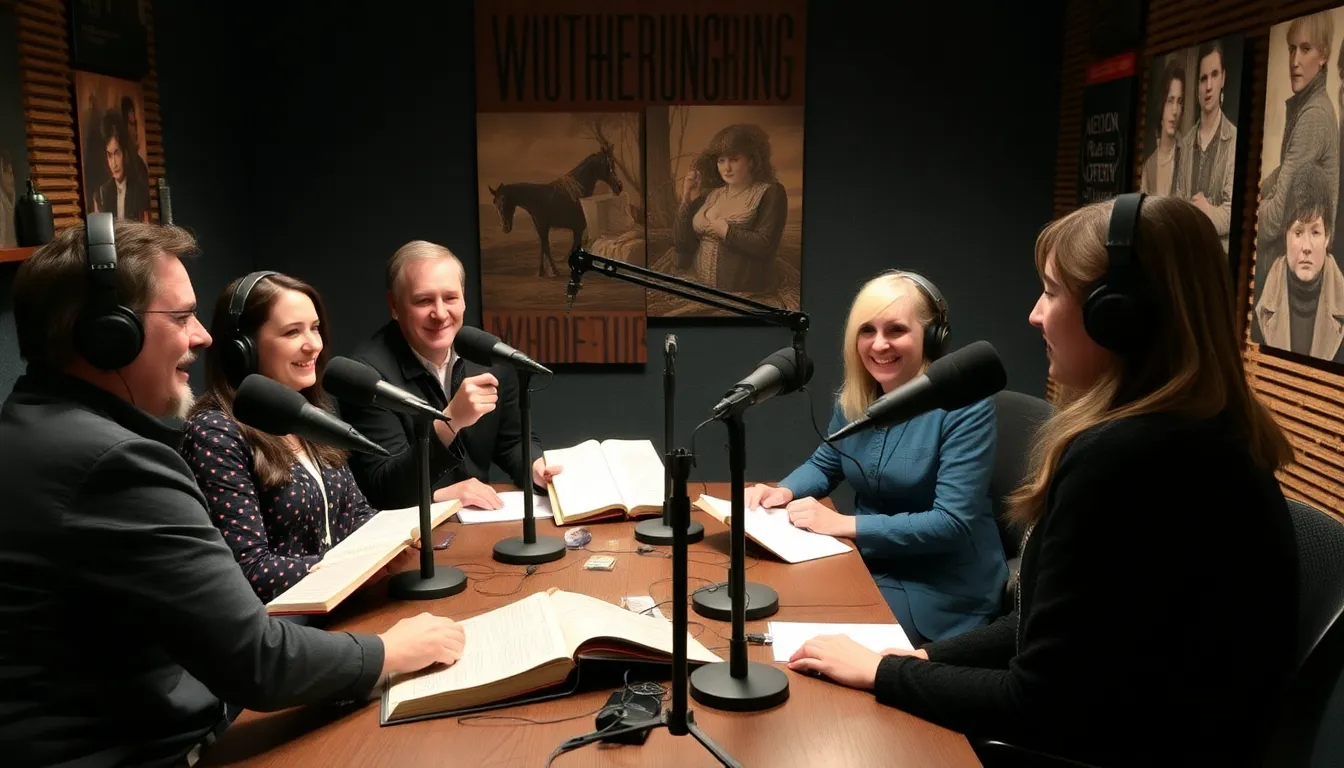
As of October 2023, several podcasts have gained traction by offering unique perspectives on Brontë’s work. For instance, “Literary Legends” released a special episode on October 10, which discusses the impact of “Wuthering Heights” on modern storytelling, and this can be further explored in our Wuthering Heights Review featuring Margot Robbie. Additionally, “Classic Lit Revisited” has launched a series that analyzes the novel’s themes in relation to current societal issues, drawing parallels that resonate with today’s listeners.
Moreover, the popularity of these podcasts reflects a broader trend in media where classic literature is being re-examined through various lenses. This trend is not only engaging longtime fans of Brontë’s work but also attracting new audiences who may be unfamiliar with the text. The combination of expert analysis and accessible discussions makes these podcasts an appealing choice for both casual listeners and literary enthusiasts, creating an opportunity for listeners to explore BBC Inside Science for more diverse literary discussions.
With the rise of digital platforms, the accessibility of literature-focused content has never been greater. As more creators tap into the rich narratives of classic works, the conversation surrounding literature continues to evolve, encouraging a diverse range of interpretations and discussions. This dynamic environment highlights the relevance of “Wuthering Heights” and its enduring legacy in the literary canon.
Understanding the Significance of Wuthering Heights
Published in 1847 under the pseudonym “Ellis Bell,” Emily Brontë’s Wuthering Heights has become a cornerstone of English literature, known for its complex characters and dark themes. Set against the backdrop of the Yorkshire moors, the novel explores intense emotions and the tumultuous relationships between its characters, particularly the passionate yet destructive love between Heathcliff and Catherine Earnshaw. This work not only challenged the conventions of its time but also paved the way for future literary explorations of psychological depth and moral ambiguity.
The historical context of Wuthering Heights is crucial to understanding its impact. The early Victorian era was marked by significant social change, including the rise of the Industrial Revolution and shifting class dynamics. These changes influenced Brontë’s portrayal of the rural gentry and the working class, as well as the isolation and struggles faced by individuals in a rapidly changing society. The novel’s setting in the remote Yorkshire landscape mirrors the emotional desolation experienced by its characters, reflecting broader themes of alienation and societal constraints.
Moreover, the Brontë sisters, including Emily, Charlotte, and Anne, were part of a literary movement that sought to give voice to women’s experiences and perspectives. The publication of Wuthering Heights coincided with a growing interest in women’s rights and the quest for independence. This context is essential for appreciating the novel’s exploration of gender roles, as it challenges traditional notions of femininity and masculinity through its strong, complex characters.
Key Milestones in Literary Reception
The initial reception of Wuthering Heights was mixed, with some critics finding it too dark and chaotic. However, over time, the novel has gained recognition for its innovative narrative structure and emotional intensity. Key milestones in its reception include the establishment of feminist literary criticism in the late 20th century, which re-evaluated Brontë’s work through a new lens, highlighting its significance in discussions about gender and power dynamics. Today, Wuthering Heights is celebrated not only as a classic of English literature but also as a profound commentary on human nature and the complexities of love.
Key Themes and Perspectives from Recent Podcasts
In the exploration of Emily Brontë’s Wuthering Heights through various podcasts, several key actors emerge, each with distinct interests and perspectives. Literary scholars, podcast hosts, and listeners all play significant roles in shaping the discourse surrounding this classic novel. Their interactions highlight the complexities of interpretation and the ongoing relevance of Brontë’s themes in contemporary society.
One of the primary stakeholders is the academic community, particularly literary critics and scholars who seek to analyze Brontë’s work through various lenses, such as feminism, psychology, and post-colonialism. Their interests lie in uncovering deeper meanings within the text and promoting its significance in literary studies. This often leads to conflicts with more casual readers or listeners who may have a different understanding or appreciation of the novel.

Another important actor is the podcast hosts, who curate content that appeals to a wide audience. They face the challenge of balancing scholarly analysis with engaging storytelling to maintain listener interest. This can create trade-offs, as hosts may simplify complex themes to make them more accessible, potentially diluting the original nuances of Brontë’s work. The economic aspect of podcasting also plays a role, as hosts may prioritize topics that attract higher listenership and sponsorships over more niche, academic discussions.
- Conflicts arise between academic interpretations and popular understandings of Wuthering Heights.
- Trade-offs in podcast content can affect the depth of literary analysis presented to the audience.
- Economic pressures influence podcast topics and formats, impacting the representation of Brontë’s work.
- Listeners’ varied backgrounds lead to diverse interpretations, enriching the discussion but complicating consensus.
- Organizations promoting literary education may seek to align with podcasts to enhance their outreach and engagement.
Finally, the role of listeners cannot be overlooked. They bring their own experiences and interpretations to the table, often challenging or enriching the perspectives offered by academic voices. This dynamic creates a vibrant dialogue that underscores the enduring relevance of Wuthering Heights while also highlighting the potential for misinterpretation and oversimplification in popular media. As these stakeholders interact, the landscape of literary discussion continues to evolve, reflecting broader societal changes and interests, much like how the modern tech life shapes the conversations we have today.
How These Podcasts Influence Literature Appreciation
The recent surge in podcasts dissecting Emily Brontë’s Wuthering Heights has a broad impact on various groups, including literature enthusiasts, educators, and the publishing industry. These podcasts not only attract listeners interested in classic literature but also engage new audiences who may not have previously explored such texts. This shift can enhance the appreciation of literary works, leading to a revitalized interest in Brontë’s themes and characters.
In the short term, listeners may experience a deeper understanding of the novel’s complexities, which can influence their daily discussions and interactions with literature. Schools and universities might incorporate these podcasts into their curricula, offering students a modern approach to classic texts. This integration can foster a more engaging learning environment, encouraging critical thinking and analysis among students.
Mid-term impacts may include a rise in book sales and adaptations, as increased interest in Wuthering Heights could lead to more people purchasing the novel or related works. The publishing industry may also see opportunities in creating companion materials, such as study guides or annotated editions, that cater to the podcast audience. Additionally, local theaters and film studios might consider adaptations, tapping into the renewed fascination with Brontë’s work.

- Risks: There is a potential for oversaturation in the market, which could dilute the quality of discussions surrounding the novel.
- Opportunities: Increased engagement with classic literature can lead to a broader cultural appreciation and inspire new artistic expressions.
- Risks: Misinterpretation of themes in the podcasts could lead to misconceptions about the text.
- Opportunities: Educators can leverage podcasts to enhance traditional teaching methods, making literature more accessible and relatable.
A: Some of the top podcasts include in-depth discussions on character analysis, thematic explorations, and historical context, providing listeners with a rich understanding of the novel. A: Most podcasts can be accessed through popular platforms like Spotify, Apple Podcasts, and Google Podcasts, where you can subscribe and listen for free. A: While many podcasts aim to be accessible, some may delve into complex themes that are better suited for mature audiences or those familiar with literary analysis. A: Yes, many podcasts feature expert guests and unique interpretations that can challenge traditional readings of Wuthering Heights, enriching the listener’s experience. A: The release schedule varies by podcast, with some offering weekly episodes while others may have a more sporadic release pattern.
Frequently Asked Questions About the Podcasts
Key Takeaways and Future Directions in Literary Podcasts
The exploration of Emily Brontë’s Wuthering Heights through various podcasts highlights the enduring relevance of classic literature in contemporary discussions. As listeners engage with these narratives, they not only gain insights into Brontë’s complex characters and themes but also reflect on their own experiences and societal issues. The podcasts serve as a bridge connecting the past with present-day interpretations, fostering a deeper appreciation for literary works.
As the popularity of literary podcasts continues to rise, there are several aspects to consider for future engagement. The intersection of literature and modern media presents an opportunity for both new and seasoned readers to delve into the nuances of classic texts. This evolving format encourages dialogue and critical thinking, making literature accessible and relevant to a broader audience.
- Expect an increase in thematic discussions that relate classic literature to current social issues.
- Look for collaborations between literary scholars and podcast creators, enhancing the depth of analysis.
- Anticipate the emergence of more interactive podcast formats, allowing audience participation in discussions.
- Watch for the integration of multimedia elements in podcasts that enrich the storytelling experience.
- Consider how the popularity of literary podcasts may influence the publishing industry and reader engagement strategies.